Mastering the Poppy Floral Border and Wreath Vector for Professional Design
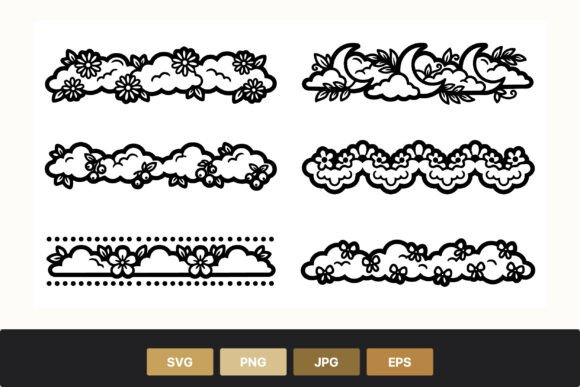
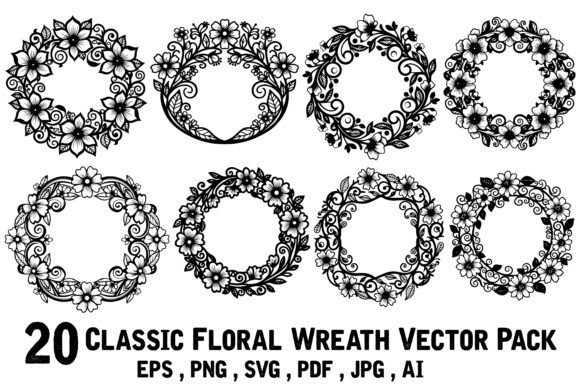
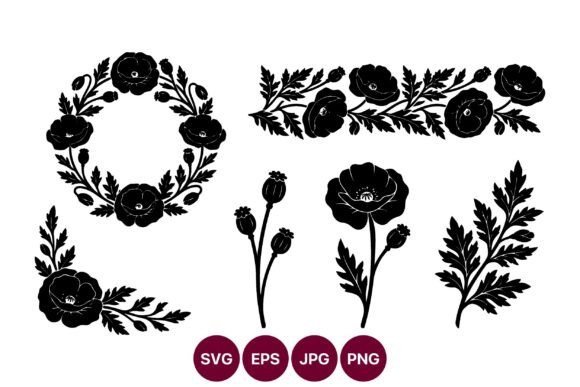
In the realm of digital illustration and graphic design, the choice of asset quality can define the success of a project. A specific collection known as the Poppy Floral Border and Wreath Vector has emerged as a significant resource for creators seeking high-contrast, scalable botanical elements. This collection features a curated set of black silhouette floral components, including circular wreaths, intricate borders, and detailed stems of poppies and foliage. Unlike raster images that degrade when enlarged, these assets are built on vector mathematics, ensuring they remain crisp at any resolution. For professionals ranging from wedding stationery designers to textbook illustrators, understanding the utility and implementation of such tools is essential for maintaining visual integrity across diverse media.
The Technical Advantage of Scalable Vector Graphics
The core value proposition of this collection lies in its format. The inclusion of SVG, PNG, JPG, and EPS files within a single ZIP folder addresses the varied technical requirements of modern workflows. However, the true power resides in the vector formats, specifically SVG and EPS. These file types utilize mathematical equations to define shapes rather than a fixed grid of pixels. This distinction is critical when working with large-format printing or high-resolution digital displays.
When a designer utilizes a Poppy Floral Border and Wreath Vector, they gain the ability to scale the artwork infinitely without losing clarity. Whether the design requires a small icon for a mobile application or a massive banner for an event venue, the lines remain sharp and the edges clean. This scalability eliminates the common frustration of pixelation, where images appear blurry or jagged upon enlargement. For print-on-demand businesses and packaging designers, this reliability ensures that the final product meets professional standards regardless of the physical dimensions required.
High-Contrast Silhouettes and Visual Impact
A defining characteristic of this specific collection is its use of black silhouettes against a transparent or white background. This high-contrast approach serves multiple aesthetic and functional purposes. In design theory, silhouettes reduce visual noise, allowing the form and structure of the flower to take center stage. The stark black color provides maximum versatility, as it can be easily recolored using standard design software to match any brand palette or thematic requirement.
The strong contrast also enhances legibility, making these elements ideal for applications where clarity is paramount. For instance, in educational materials or signage, a complex, multi-colored illustration might distract from the text. A bold, black silhouette of a poppy stem or a circular wreath acts as a clear visual anchor without competing for attention. This simplicity allows the artist to layer these elements over photographs, textured backgrounds, or other graphics while maintaining distinct separation and readability.
Practical Applications Across Industries
The versatility of the Poppy Floral Border and Wreath Vector extends far beyond simple decoration. Its modular nature—comprising individual stems, full borders, and complete wreaths—allows for dynamic composition in various sectors. By breaking down the collection into its constituent parts, users can construct custom layouts that feel unique and tailored to their specific needs.
- Wedding and Event Stationery: The circular wreath elements are particularly effective for invitations, menus, and save-the-date cards. Designers often place text within the negative space of the wreath, creating a classic, elegant frame. The poppy motifs add a touch of organic romance without overwhelming the typography.
- Book Publishing and Education: Chapter headers, page footers, and section dividers benefit greatly from floral borders. Educators and authors can use these vectors to create engaging worksheets, textbooks, and children's books. The black-and-white nature makes them perfect for cost-effective black-and-white printing.
- Apparel and Textile Design: The repeatable nature of the border and stem elements makes them suitable for fabric patterns. When tiled, these silhouettes can create seamless prints for clothing, scarves, or home textiles. The vector format ensures that the pattern remains sharp even when scaled to cover large areas of fabric.
- Digital Branding and Web Design: Website headers, email signatures, and social media banners often require lightweight, fast-loading graphics. SVG files are ideal for this purpose as they are code-based and compress well, improving site performance while delivering high-quality visuals.
Workflow Integration and File Management
Efficiency is a key component of professional design work. The delivery of this collection in a comprehensive ZIP folder containing multiple file formats streamlines the integration process. Designers do not need to convert files manually; they can select the appropriate format based on their immediate task.
For those working in Adobe Illustrator or CorelDRAW, the EPS files provide native compatibility, allowing for deep editing capabilities. Users can ungroup the elements, adjust the thickness of the stems, or modify the curvature of the petals directly. If the workflow involves web development, the SVG files can be embedded directly into HTML or CSS, enabling interactive animations and responsive resizing. For quick mockups or presentations where vector editing is not necessary, the included PNG and JPG files offer immediate usability with transparency support for the PNGs.
This multi-format approach reduces friction in the creative process. A team member working on print production can access the high-resolution EPS, while a colleague managing social media campaigns can instantly grab the optimized PNG. This division of resources ensures that every aspect of a project utilizes the most efficient tool for the job, saving time and reducing the risk of technical errors.
Customization Techniques for Unique Results
While the base assets are provided as black silhouettes, the potential for customization is vast. One common technique involves changing the fill color to gradients or textures. By applying a gradient mesh to the poppy petals, a flat silhouette can be transformed into a three-dimensional, realistic-looking flower. Alternatively, designers can overlay textures like paper grain, watercolor washes, or metallic finishes to align with a specific brand identity.
Another powerful method is combining elements from the collection with other assets. The stems and foliage can be extended or trimmed to fit irregular shapes, while the circular wreath can be intersected with geometric forms to create a modern fusion style. Because the artwork is 100% vector, these manipulations do not compromise the quality of the image. This flexibility empowers hobbyists and business owners alike to create bespoke designs that stand out in a crowded marketplace.
Considerations for Effective Implementation
Despite the advantages, successful implementation requires thoughtful consideration of context and balance. The high-contrast nature of black silhouettes means they carry significant visual weight. Overusing these elements can lead to a cluttered or heavy design. It is often more effective to use the Poppy Floral Border and Wreath Vector as an accent rather than the primary focus, allowing ample white space to breathe.
Furthermore, cultural associations should be considered. Poppies are rich in symbolism, often representing remembrance, sleep, or rebirth depending on the region and context. While this adds depth to a design, it is important to ensure the imagery aligns with the intended message of the project. For commercial branding, this symbolic resonance can strengthen the connection with the audience if used appropriately.
Accessibility is another factor to keep in mind. High-contrast designs generally score well in accessibility audits because they are easier to distinguish for users with visual impairments. However, when placing text over or near these floral elements, designers must ensure sufficient contrast between the text color and the background to maintain readability. The solid black of the silhouette provides a strong base, but care must be taken not to obscure important information.
The Evolution of Botanical Design Trends
Current design trends favor a return to organic, hand-drawn aesthetics mixed with clean, modern execution. The Poppy Floral Border and Wreath Vector fits perfectly into this narrative. The silhouette style evokes the charm of vintage botanical illustrations found in old field guides, yet the precision of the vector format offers a contemporary edge. This blend of nostalgia and modernity resonates with a broad audience, from consumers seeking artisanal products to corporations aiming for a human-centric brand voice.
As digital platforms continue to evolve, the demand for versatile, high-quality assets will only increase. The ability to adapt a single set of graphics for everything from a printed brochure to a responsive website layout is becoming a standard expectation. Collections that offer this level of flexibility, combined with the artistic merit of well-crafted floral elements, represent a valuable investment for any creative professional. By mastering the use of these tools, designers can produce work that is not only visually striking but also technically robust and adaptable to the future needs of their projects.