Lily Flower Line Art: A Practical Guide for Designers and Creators
In the realm of visual communication, simplicity often yields the most profound impact. Lily Flower Line Art represents a specific aesthetic approach where the elegance of the lily is captured through clean, continuous strokes rather than heavy shading or complex textures. This style bridges the gap between botanical accuracy and modern minimalism, making it an essential asset for professionals ranging from graphic designers to tattoo artists. Understanding how to integrate these assets into your workflow can significantly streamline production times while elevating the quality of your final deliverables.
The versatility of this art form lies in its adaptability. Whether you are preparing a marketing campaign, designing a wedding invitation suite, or creating a vector library for a client, Lily Flower Line Art serves as a foundational element that interacts seamlessly with various design systems. By leveraging high-quality files available in formats such as SVG, PNG, EPS, JPG, and PDF, creators can ensure their projects maintain consistency across digital screens and physical print media alike.
Understanding the Asset and Its Formats
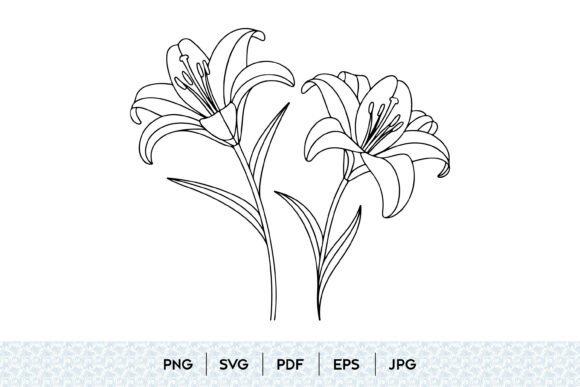
Before integrating any visual resource into a project, it is crucial to understand the technical specifications and the nature of the file itself. A lily flower line art illustration is typically defined by its contour drawing style, focusing on the outline of the petals, stamen, and leaves without internal color fills. This monochrome approach allows the subject to blend effortlessly into diverse color palettes and backgrounds.
The availability of multiple file formats is a critical factor in planning your workflow. Each format serves a distinct purpose within the broader creative process:
- SVG (Scalable Vector Graphics): Ideal for web design and responsive layouts. The vector nature ensures that the floral outline remains crisp at any resolution, from a mobile icon to a large banner.
- EPS (Encapsulated PostScript): The industry standard for professional printing. If your project involves large-scale signage or high-resolution brochures, the EPS version of the botanical drawing provides the necessary precision.
- PNG (Portable Network Graphics): Best for digital overlays where transparency is required. This format preserves the black line drawing against a transparent background, perfect for layering in photo editing software.
- JPG and PDF: Useful for sharing proofs with clients or embedding in documents where vector scalability is less critical than file compatibility.
Choosing the right format at the outset prevents time-consuming conversions later. For instance, starting a print project with a low-resolution JPG can lead to pixelation, whereas beginning with an SVG or EPS file guarantees sharpness throughout the production cycle.
Integration into Professional Workflows
The utility of Lily Flower Line Art extends beyond simple decoration; it is a functional tool that can be deployed at various stages of a project lifecycle. In the pre-production phase, these assets serve as mood board elements. When brainstorming a brand identity or a product packaging concept, a minimalist flower sketch can help define the tone—elegant, organic, and sophisticated.
During the execution phase, the integration becomes more technical. For a web designer, dragging a floral vector into a layout tool like Adobe Illustrator or Figma allows for immediate manipulation. Because line art is inherently flexible, you can alter stroke weights, change colors to match brand guidelines, or combine multiple lilies into a seamless pattern. This flexibility reduces the need for custom illustration work, saving valuable hours in the design schedule.
For small business owners and entrepreneurs, particularly those in the handmade goods sector, these assets offer a quick path to professional branding. A floral printable featuring a hand-drawn lily can be instantly applied to labels, tags, or packaging designs. The process-oriented benefit here is speed-to-market. Instead of commissioning a custom illustrator, which may take weeks, utilizing a high-quality flower svg allows for immediate application and testing.
Workflow Examples Across Industries
Different sectors utilize these assets in unique ways, tailored to their specific operational needs.
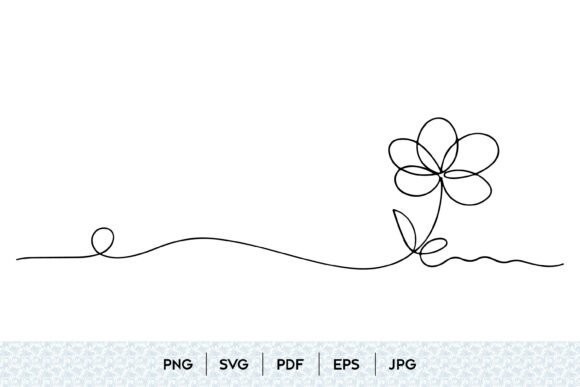
Tattoo Artists and Body Modification: In the tattoo industry, precision is paramount. A tattoo flower design based on continuous line art offers clarity and flow, which translates well to skin. Artists often use the PDF or high-res PNG versions to trace over or project onto the client's skin. The clean lines of a lily illustration reduce the risk of ink bleeding and ensure the design ages gracefully.
Interior Design and Home Decor: For those creating floral wall art, the ability to scale the image is vital. A large-format print of a bloom illustration requires a source file that does not degrade when enlarged. Using the EPS or vector versions allows interior designers to produce gallery-quality prints that fit various room dimensions without losing detail.
Educational and Publishing: In botanical education or publishing, accuracy matters. While stylized, a botanical sketch of a lily retains enough structural integrity to be informative. Educators can use these images in presentations or textbooks to highlight plant anatomy without the distraction of color, focusing students' attention on the form and structure.
Strategic Implementation and Quality Control
To maximize the value of Lily Flower Line Art, one must consider factors such as organization, consistency, and long-term usability. A common pitfall in creative workflows is poor asset management. Without a structured system, finding the specific version of a modern floral design needed for a revision can become frustrating.
Establish a dedicated folder structure for your line art assets. Organize them by style (e.g., "Continuous Line," "Botanical Sketch") and format. This organization ensures that when a decision needs to be made quickly—such as swapping a logo mark for a different elegant flower variant—the correct file is immediately accessible. Furthermore, maintaining a master library of these assets allows for consistent branding across all touchpoints, from social media graphics to business cards.
Quality control is another essential aspect. Before finalizing a design, always inspect the line art at 100% zoom. Check for closed paths in vector files to ensure they can be filled with color if needed later. Verify that the contrast of the black line drawing is sufficient for the intended medium. For example, a very fine line might disappear in a newspaper print but look exquisite on a matte-finish cardstock. Testing the asset in its final environment before mass production prevents costly reprints and delays.
Enhancing Creativity Through Combination
The true power of Lily Flower Line Art emerges when it is combined with other elements. These illustrations act as neutral anchors that support typography, photography, and other graphical elements. In a marketing context, pairing a minimalist vector lily with bold, sans-serif typography creates a contemporary aesthetic that appeals to modern consumers.
Consider the interaction between the line art and negative space. The simplicity of a simple flower art piece allows the surrounding white space to breathe, directing the viewer's eye precisely where intended. This is particularly effective in editorial design, where the goal is to complement text without overpowering it. Additionally, these assets can be layered over textured backgrounds, such as watercolor washes or grainy paper scans, to add depth and character while retaining the clean definition of the contour drawing.
For digital creators, the digital flower art can be animated. Simple line drawings are excellent candidates for motion graphics. A lily blooming frame-by-frame using continuous line techniques can create engaging content for social media stories or website headers. This dynamic application transforms a static image into an interactive experience, increasing user engagement and retention.
Long-Term Value and Scalability
Investing time in selecting high-quality Lily Flower Line Art pays dividends over the long term. Unlike trend-heavy clipart that may date quickly, the timeless nature of botanical line drawings ensures longevity. A floral elegance sketch created today will likely remain relevant in five or ten years, making it a sustainable choice for brand assets.
Furthermore, the scalability of vector-based line art means that a single purchase or creation can serve multiple purposes indefinitely. As a business grows and its needs evolve—from a simple blog header to a full-scale retail packaging line—the same core asset can be adapted to meet new requirements. This efficiency reduces the need for recurring design costs and maintains a cohesive visual identity.
Ultimately, the integration of Lily Flower Line Art into your workflow is about balancing aesthetics with practicality. It offers a solution that is both visually striking and technically robust. By understanding the formats, planning the implementation, and maintaining rigorous quality standards, professionals can harness the beauty of nature to enhance their projects effectively. Whether you are a freelancer managing tight deadlines or a corporate team executing a major launch, these versatile assets provide a reliable foundation for creative success.