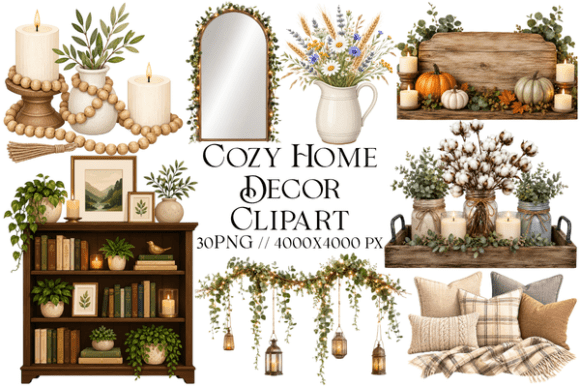
Cozy Home Decor Clipart: A Practical Guide for Designers and Creators
In the realm of digital design and physical crafting, the selection of visual assets often dictates the emotional resonance of a final product. Cozy Home Decor Clipart serves as more than just decorative filler; it is a foundational element that establishes atmosphere, style, and brand identity in a single glance. For professionals ranging from sublimation print shop owners to independent scrapbookers, integrating high-quality aesthetic illustrations into a workflow requires a strategic approach. This guide explores how to effectively utilize these specific PNG bundles to streamline your creative process, ensure quality control, and maximize the utility of your digital assets.
Defining the Asset Within Your Creative Workflow
Before diving into execution, it is essential to understand what Cozy Home Decor Clipart represents in a broader production context. Unlike generic stock photography, which can be heavy on file size and difficult to manipulate, clipart offers vector-like scalability and transparency. Specifically, bundles featuring soft aesthetic interior styles—such as candles, woven baskets, rustic lanterns, and cozy chairs—provide a curated palette of warm neutrals. These elements are pre-designed to work harmoniously together, reducing the time spent on color matching and composition during the early stages of a project.
When planning a new collection, whether for a seasonal marketing campaign or a personal DIY initiative, this type of clipart acts as a mood board accelerator. Instead of sourcing individual images from disparate sources, a cohesive bundle ensures that every pumpkin, coffee mug, or plant shares the same artistic lineage. This consistency is critical for maintaining a professional look across various deliverables, from social media graphics to printed merchandise. By treating these files as modular components, you can rapidly prototype designs without compromising on aesthetic integrity.
Pre-Production Preparation and File Management
Efficiency begins before the first pixel is placed. When acquiring a Cozy Home Decor Clipart PNG Bundle, such as one containing 30 high-resolution files at 4000 x 4000 pixels, proper organization is paramount. The sheer volume of high-quality assets can quickly clutter a workspace if not managed correctly. A practical workflow involves creating a dedicated folder structure immediately upon download. Sub-folders should categorize items by theme (e.g., "Textiles," "Lighting," "Botanicals") or by intended application (e.g., "Sublimation," "Printable Art").
Compatibility checks are another vital step in the preparation phase. Since these assets feature transparent backgrounds, they must be compatible with your primary design software, whether that is Adobe Illustrator, Photoshop, Canva, or specialized sublimation tools like Printful or Cricut Design Space. Verifying that the PNG files maintain their transparency layers without white halos or compression artifacts ensures a smooth transition into the design phase. High-resolution quality is non-negotiable for large-format printing; therefore, confirming the 4000 x 4000 PX dimensions against your output requirements prevents costly reprints due to pixelation.
Integrating Assets Into Diverse Project Types
The versatility of Cozy Home Decor Clipart allows it to fit seamlessly into multiple distinct workflows. Understanding where these assets fit within the lifecycle of different projects helps creators maximize their return on investment.
Sublimation and Merchandise Production
For entrepreneurs focused on sublimation printing, these PNGs are ideal for creating products like mugs, tote bags, and t-shirts. The workflow here involves placing the clipart onto a mockup template, adjusting opacity or layer blending modes to achieve a distressed or vintage look if desired, and then sending the file to print. Because the background is transparent, the design adheres perfectly to the contours of the product without unsightly boxes. The warm neutral tones inherent in modern farmhouse and cottagecore styles translate exceptionally well to ceramic and fabric substrates, appealing to a demographic seeking comfort and nostalgia.
Digital Planning and Stationery
In the digital planner and stationery market, efficiency and usability are key. Creators use Cozy Home Decor Clipart to decorate monthly calendars, habit trackers, and journal covers. Here, the process involves importing the PNGs into PDF editors or note-taking apps like GoodNotes. The high resolution ensures that even when zoomed in on a tablet screen, the details of a woven basket or a candle flame remain crisp. This integration enhances the user experience of the planner, making the act of organizing tasks feel more inviting and less clinical.
Scrapbooking and Physical Crafts
For hobbyists engaged in scrapbooking or decal creation, the workflow shifts to physical output. After designing a layout digitally, the creator prints the selected clipart onto adhesive vinyl or sticker paper. The transparent background eliminates the need for weeding around complex shapes, saving significant time during the cutting process. Whether creating wall art for a home office or decorating a memory book, the ability to layer these elements—placing a blanket over a chair or a plant beside a vase—adds depth and realism to flat physical media.
Optimizing Quality and Consistency Across Platforms
Maintaining visual consistency is a challenge when an asset is used across both digital and physical mediums. The soft aesthetic interior style found in these bundles provides a built-in safeguard against clashing visuals. However, creators must still apply rigorous quality control. When using these files for web-based marketing, compress them appropriately to ensure fast loading times without losing the delicate textures of the artwork. Conversely, for print-on-demand services, always export in CMYK mode if required by the printer, ensuring the warm neutrals do not shift to muddy tones during the conversion process.
Furthermore, consider the interaction between the clipart and typography. The elegant details of a lantern or a mirror frame can easily compete with bold fonts. A practical tip is to treat the clipart as the supporting character to your text. Use the negative space around the illustrations to anchor headlines or body copy. This balance ensures that the message remains clear while the imagery provides the necessary emotional context. Testing designs on actual devices or proof prints before full-scale production is a crucial step to verify that the aesthetic intent is preserved.
Long-Term Utility and Scalability
Investing in a comprehensive bundle of 30 designs offers long-term value beyond a single project. As trends evolve, the core appeal of cozy, home-centric imagery remains relatively stable, particularly in the evergreen niches of lifestyle blogging and home decor retail. By archiving these assets properly, you create a reusable library that can be mixed and matched for future campaigns. For instance, a set of pumpkins and rustic accents used for an autumn collection can be repurposed with different color overlays for a winter holiday series, extending the lifespan of the initial purchase.
Additionally, these assets facilitate collaboration. When working with a team of designers or outsourcing parts of a project, having a standardized library of Cozy Home Decor Clipart ensures that everyone is working from the same visual baseline. This reduces communication friction and speeds up the approval process. It also allows for the rapid generation of variations; a single base image of a cozy chair can be duplicated and modified to show different throw blankets or lighting conditions, creating a suite of related content efficiently.
Strategic Implementation for Maximum Impact
To truly leverage the potential of Cozy Home Decor Clipart, adopt a mindset of intentional design. Do not simply scatter images across a canvas; instead, curate scenes that tell a story. Combine a coffee mug with an open book and a small plant to evoke a sense of morning routine and relaxation. This narrative approach resonates deeply with audiences aged 20–50 who value authenticity and lifestyle alignment. Whether you are designing an invitation for a bridal shower, a logo for a boutique, or a series of stickers for a productivity planner, the goal is to create an immediate emotional connection.
By understanding the technical specifications, organizing your files for quick access, and applying these assets strategically within your specific workflow, you transform simple digital images into powerful tools for communication and commerce. The result is a streamlined process that yields high-quality, aesthetically pleasing outcomes, ready for both digital engagement and tangible production.