Minimal Flower Line Art: A Practical Guide to Styles, Formats, and Applications
In the realm of contemporary graphic design and home decor, Minimal Flower Line Art has emerged as a dominant aesthetic. Characterized by its reduction of complex botanical forms into essential contours, this style strips away shading, texture, and color to focus purely on the structural elegance of the bloom. For designers, decorators, and creators evaluating visual assets, understanding the nuances of this approach is critical. It is not merely a trend but a functional choice that influences readability, scalability, and emotional resonance in a project.
This guide explores the distinct qualities of minimal flower line art, compares it with alternative illustration styles, and evaluates the practical implications of choosing specific file formats like SVG, PNG, EPS, JPG, PDF, and others. By examining the strengths, tradeoffs, and best-fit scenarios, you can determine whether this minimalist approach aligns with your specific creative or commercial goals.
Defining the Essence of Minimalist Floral Design
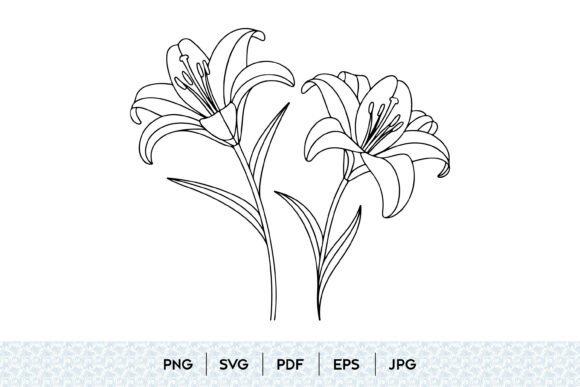
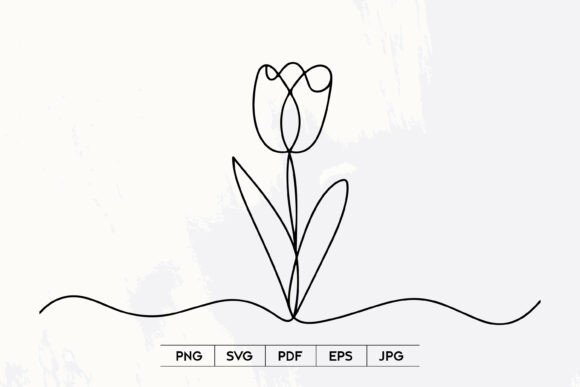
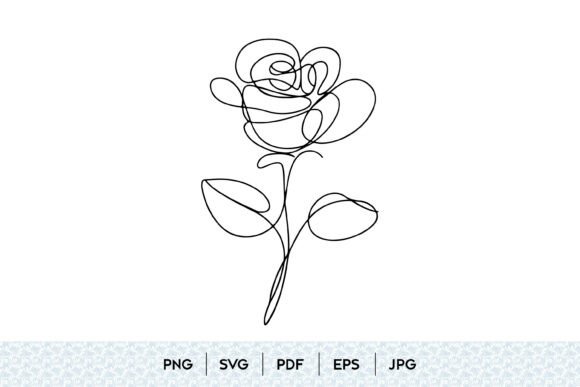
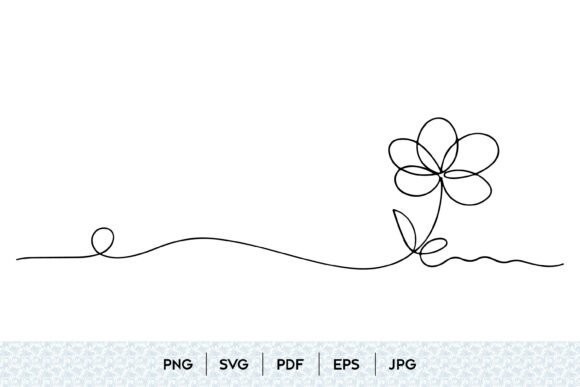
At its core, Minimal Flower Line Art relies on the principle of subtraction. Unlike traditional botanical illustrations that strive for scientific accuracy through detailed rendering of petals, stamens, and veins, line art focuses on the silhouette and flow. The result is often a one line drawing or a continuous line art piece where the pen never lifts from the surface, creating a fluid, organic rhythm.
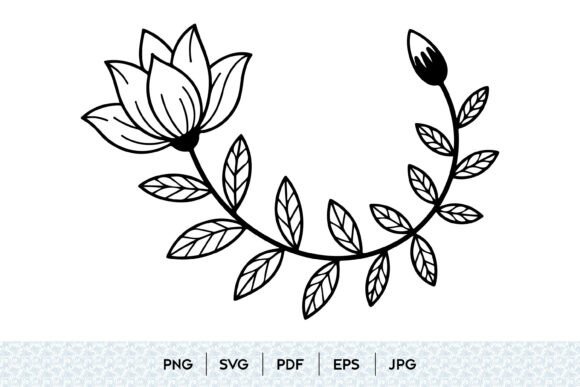
This style encompasses various sub-categories, including simple flower illustration, abstract flower concepts, and contour drawing. The defining feature is the use of black line art against a neutral background, though the underlying vector data allows for infinite color variation. Whether executed as a hand-drawn flower sketch or a digitally precise floral vector, the goal remains the same: to convey the spirit of nature through the fewest possible strokes.
The appeal lies in its versatility. Because it removes visual clutter, minimal floral designs integrate seamlessly into modern interiors, branding identities, and digital interfaces. They function effectively as decorative line art that adds sophistication without overwhelming the surrounding space.
Comparing Minimal Line Art with Alternative Illustration Styles
When selecting visual assets, it is essential to weigh minimal flower line art against other popular botanical styles. Each approach serves different communicative purposes and fits distinct design contexts.
Minimal Line Art vs. Traditional Botanical Illustration
Traditional botanical drawings are rooted in scientific documentation. They prioritize anatomical precision, utilizing watercolor washes, cross-hatching, and intricate detailing to depict species accurately. While these pieces offer historical gravitas and rich texture, they can appear heavy or dated in modern, clean layouts.
In contrast, Minimal Flower Line Art sacrifices detail for abstraction. It captures the essence of a wildflower or bloom rather than its biological specifics. If your project requires a sense of heritage, academic rigor, or vintage charm, traditional botanical art may be superior. However, if the goal is modernity, speed of recognition, and adaptability across various media, the minimalist approach is often more effective.
Line Art vs. Flat Vector and Watercolor Styles
Flat vector illustrations typically involve solid blocks of color and geometric simplification. While also modern, flat vectors rely on color fields to define shape. Minimalist floral line art, conversely, relies entirely on stroke weight and curvature. This makes line art particularly advantageous for monochrome applications, such as engraving, embroidery, or laser cutting, where color fills are impractical.
Watercolor floral art introduces texture and unpredictability, evoking emotion through soft edges and bleeding pigments. While beautiful, watercolor scans often lack the crispness required for large-scale printing or high-resolution digital scaling. Line art maintains sharpness at any size, provided the source file is a vector format.
Evaluating File Formats: Technical Considerations
The utility of minimal flower line art is heavily dependent on the file format chosen. Understanding the differences between SVG, PNG, EPS, JPG, and PDF is crucial for ensuring the artwork performs correctly in its intended environment.
- SVG (Scalable Vector Graphics): Ideal for web design and digital applications. As an editable SVG format, it allows for infinite scaling without quality loss. Designers can manipulate individual paths, change stroke weights, and recolor elements instantly. This is the preferred choice for responsive websites and interactive UI elements.
- EPS (Encapsulated PostScript): The industry standard for professional print production. If you plan to use the artwork for large-format banners, packaging, or high-end editorial prints, an EPS file ensures compatibility with professional typesetting software and offset printing presses.
- PNG (Portable Network Graphics): Best for raster-based digital use where transparency is required. A high-resolution PNG is suitable for social media graphics or web overlays. However, unlike vectors, PNGs have a fixed resolution; enlarging them beyond their original dimensions results in pixelation.
- JPG (Joint Photographic Experts Group): Generally less suitable for line art due to compression artifacts that can blur thin lines. JPGs are acceptable only for low-stakes digital previews or when file size is the primary constraint.
- PDF (Portable Document Format): A versatile container that can hold both vector and raster data. PDFs are excellent for printable artwork, ensuring that fonts and vectors remain intact when shared with clients or sent to printers.
For most professional workflows, obtaining a bundle containing multiple formats—specifically SVG for digital editing and EPS/PDF for print—is the most strategic decision. Relying solely on raster formats like JPG limits the longevity and adaptability of the asset.
Strengths and Tradeoffs of the Minimalist Approach
Adopting minimal flower line art offers significant advantages, but it is not a universal solution. Evaluating the tradeoffs helps in making an informed decision.
Key Strengths
The primary benefit is versatility. Because these designs are often monochrome illustrations, they do not clash with existing color palettes. A simple botanical outline can be colored to match a brand identity or left in stark black for high contrast. Furthermore, the simplicity of a continuous line art piece ensures fast loading times on websites and easy reproduction on physical products like t-shirts, mugs, and stationery.
Another strength is aesthetic timelessness. Trends in bold colors or hyper-realism shift rapidly, but the clean lines of a modern floral sketch tend to age well. They align with the "less is more" philosophy prevalent in contemporary interior design and user interface trends.
Potential Limitations
The main tradeoff is the potential lack of emotional depth. Without shading, texture, or vibrant color, some audiences may find the artwork too sterile or impersonal. In contexts requiring a strong emotional connection—such as memorial tributes or romantic themes—the subtlety of line art might feel insufficient compared to the warmth of a painted illustration.
Additionally, the success of line art depends heavily on the skill of the artist. A poorly executed one-line drawing can look unfinished or amateurish. The curves must be deliberate, and the negative space must be balanced. When sourcing these assets, quality control is paramount; a cheap clipart download often lacks the nuanced flow of a genuine hand drawn flower.
Determining the Right Fit for Your Project
Deciding whether Minimal Flower Line Art is the right choice depends on the specific objectives of your project. Here are realistic scenarios where this style excels and where alternatives might be preferable.
When to Choose Minimal Line Art
Select this style if you are designing for branding and logos. Logos require scalability and clarity at small sizes, which line art provides naturally. It is also the optimal choice for home decor, particularly in Scandinavian or Japandi interiors where clean lines and natural motifs are central. For textile design, such as fabric patterns or wallpaper, the repetitive nature of simple floral outlines creates rhythmic, unobtrusive backgrounds that allow furniture and lighting to take center stage.
If you need printable artwork for DIY projects, line art is cost-effective. It prints clearly on almost any paper type and works well with various mediums, including screen printing and heat transfer vinyl.
When to Consider Alternatives
Consider other styles if your audience expects luxury opulence. Gold-leaf effects, rich textures, and deep shadows often communicate luxury better than thin black lines. Similarly, for children's products, the abstract nature of minimal line art may be less engaging than colorful, character-driven illustrations. If the project involves scientific or educational content, the abstraction inherent in line art could lead to misinterpretation, making detailed botanical illustrations the safer choice.
Practical Implementation and Sourcing
When integrating minimal flower line art into your workflow, consider the source quality. High-quality assets should be available as editable SVG files, allowing you to customize the stroke width or remove specific elements to fit your layout. Look for collections that offer a range of complexities, from single-stroke wildflowers to slightly more detailed contour drawings.
For digital artists, using these assets as base layers for further manipulation can yield unique results. You can overlay textures, add gradients, or combine multiple line drawings to create a creative artwork that feels bespoke. For non-designers, focusing on ready-to-print PDF or JPG versions ensures ease of use without requiring specialized software.
Ultimately, the decision to use minimal flower line art should be driven by the desired outcome. It is a powerful tool for achieving clarity, modernity, and elegance. By understanding its technical requirements and aesthetic boundaries, you can leverage this style to enhance your projects effectively, ensuring the final result is both visually striking and functionally sound.