Vintage Envelope with Flowers Clipart: A Practical Guide for Designers
In the realm of digital stationery and graphic design, the Vintage Envelope with Flowers Clipart has emerged as a versatile asset for creators seeking to evoke nostalgia and elegance. This specific collection, often characterized by watercolor botanical illustrations, offers a distinct aesthetic that bridges the gap between traditional correspondence and modern digital media. For adults aged 20 to 50 who are managing personal projects or running small creative businesses, understanding the nuances of this resource is essential. It is not merely a decorative image; it is a functional design element that requires careful evaluation against other available options.
Defining the Aesthetic and Technical Specifications
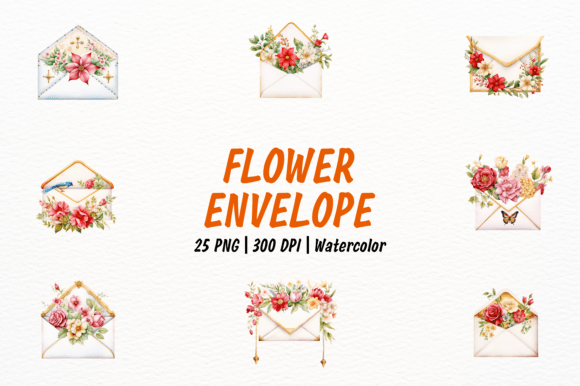
The core appeal of Vintage Envelope with Flowers Clipart lies in its synthesis of historical postal elements and organic floral motifs. Unlike generic vector graphics that can appear sterile or overly geometric, these designs typically feature soft watercolor textures. The inclusion of specific botanical subjects—such as delicate roses, lush peonies, and classic daisies—adds a layer of naturalism that resonates with audiences looking for romantic or ornate styles. Furthermore, the integration of details like gold accents, wax seals, ribbons, and crystal embellishments elevates the perceived value of the final product.
From a technical standpoint, the quality of such clipart is paramount. High-resolution standards, specifically 300 DPI at dimensions of 3000 x 3000 pixels, ensure that the images remain crisp when printed on physical media. The availability of both PNG files with transparent backgrounds and JPG versions with white backgrounds provides flexibility. The transparent PNG format is particularly critical for designers who need to overlay these envelopes onto complex backgrounds without awkward white borders. This dual-format approach addresses a common pain point in digital asset acquisition, allowing users to choose the file type that best suits their immediate workflow.
Comparing Watercolor Styles Against Vector Alternatives
When evaluating design resources, a primary decision factor is the artistic medium. Vintage Envelope with Flowers Clipart usually falls into the hand-painted or watercolor category. This contrasts sharply with flat vector illustrations or line art. While vectors offer infinite scalability and clean lines, they often lack the textural depth and emotional warmth associated with watercolor. If a project aims to convey a sense of handmade authenticity, such as a wedding invitation suite or a boutique gift card, the watercolor style is generally superior.
However, there are tradeoffs. Watercolor clipart relies on pixel data, meaning extreme scaling beyond the original resolution can result in pixelation. In contrast, vector graphics (SVG or EPS) maintain perfect clarity at any size. Therefore, if the intended use involves large-scale printing, such as banners or billboards, a vector-based alternative might be more appropriate. For standard print sizes like business cards, menus, or social media graphics, the high resolution of the vintage envelope set is typically sufficient. The choice ultimately depends on the balance between the desired "hand-painted" look and the technical requirements of the output medium.
Evaluating Use Cases and Application Scenarios
The versatility of this clipart set extends across various domains, from DIY handicrafts to professional commercial ventures. One of the most common applications is in the creation of greeting cards. Whether for weddings, birthdays, or baby showers, the combination of an envelope with a wax seal and floral arrangements creates an immediate impression of thoughtfulness and care. Designers can easily integrate these elements into templates for Canva or Adobe products to produce cohesive branding materials.
Beyond paper goods, the digital utility of these assets is significant. They serve as effective icons for email newsletters, website headers, or social media posts, particularly for brands operating in the lifestyle, beauty, or event planning sectors. The presence of secondary elements like butterflies, birds, and ribbons allows for collage-style compositions that feel curated rather than random. For instance, a florist might use a single envelope adorned with a peony as a logo mark, while a scrapbooker could utilize the entire set to create a themed album cover.
It is also worth considering the "secondary creation" aspect permitted by many licensing agreements for this type of content. Users are often allowed to sell derivative works, such as printed invitations or stickers featuring the clipart. This makes the resource a viable investment for entrepreneurs. However, it is crucial to distinguish between selling a product that contains the image versus reselling the image file itself. Most legitimate licenses prohibit the latter, ensuring that the original artist's intellectual property remains protected while still enabling buyers to monetize their creative output.
Strengths, Limitations, and Decision Factors
Deciding whether to incorporate Vintage Envelope with Flowers Clipart into a project requires weighing its strengths against potential limitations. The primary strength is the time-saving benefit. Creating high-quality watercolor illustrations of envelopes with intricate botanical details from scratch is a labor-intensive process requiring specialized skills. Purchasing a pre-made set of 25 designs allows creators to bypass the production phase and focus on layout and composition.
Conversely, the limitation lies in the potential for homogeneity. Because popular clipart sets are accessible to many designers, there is a risk that a client may recognize the same flower arrangement on another brand's materials. To mitigate this, designers should treat the clipart as a base element rather than a standalone solution. Techniques such as adjusting color saturation, adding custom typography, combining multiple elements in unique ways, or applying texture overlays can help differentiate the final design. Additionally, the specific style of "vintage" may not align with every brand identity. Companies aiming for a minimalist, futuristic, or strictly corporate aesthetic would find these ornate, romantic designs ill-suited for their needs.
Assessing Licensing and Commercial Viability
A critical component of purchasing digital assets is understanding the terms of use. The typical license for a Vintage Envelope with Flowers Clipart set includes permissions for both personal and commercial use. This encompasses printing for physical products like flashcards, menus, and decorations, as well as digital distribution via websites and social media platforms. The ability to engage in secondary creation is a significant advantage, allowing users to build a product line around the imagery.
However, clear boundaries exist. The prohibition against selling the original image file on other marketplaces is a standard industry practice designed to protect the creator's revenue stream. Users must ensure they are compliant with these restrictions to avoid legal complications. For those comparing options, it is advisable to review the specific license agreement attached to the purchase. Some resources may offer extended licenses for larger print runs or exclusive rights, which could be necessary for high-volume commercial campaigns.
Conclusion: Making an Informed Choice
The Vintage Envelope with Flowers Clipart represents a robust tool for designers who prioritize elegance, texture, and efficiency. Its suitability is highest for projects requiring a romantic, nostalgic, or handcrafted feel, such as wedding stationery, boutique branding, and personalized gifts. While it may not replace the need for custom illustration in highly unique or large-scale applications, it offers a cost-effective and time-efficient alternative for most standard design tasks.
Ultimately, the decision to use this resource should be driven by the specific goals of the project. If the objective is to achieve a polished, artistic look without the overhead of commissioning original art, this clipart set provides excellent value. By understanding its technical specifications, stylistic boundaries, and licensing terms, creators can confidently integrate these vintage elements into their work, enhancing their visual storytelling while maintaining professional integrity.